
DNA Barcoding
Use DNA barcoding to explore biodiversity
DNA Barcoding
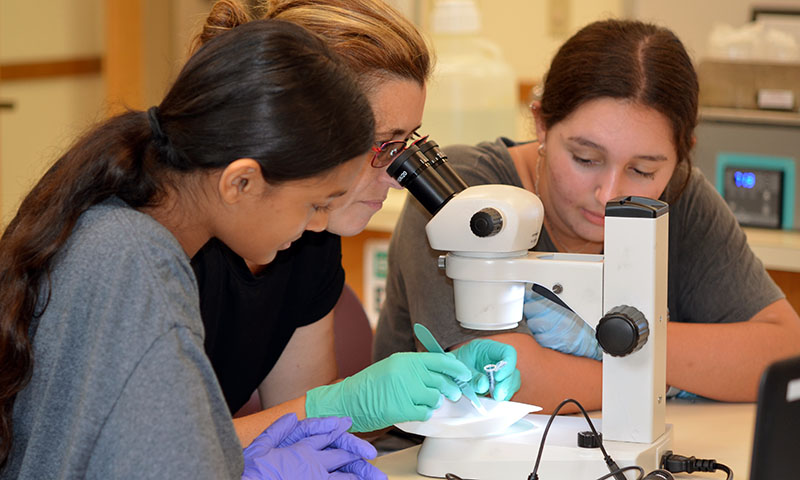
DNA Barcoding is a project-based science workshop for students entering grades 10–12. Participants use the same DNA barcoding methods employed by museum scientists and conservation biologists to identify species from short, unique DNA sequences called 'barcodes'. Students will design and implement an authentic investigation and analyze their results using the same bioinformatics tools that professional scientists use.
This workshop prepares students to launch independent projects at their home institutions, or join our academic-year student research programs to conduct original, teacher-supervised research for our final symposium. Ultimately, this workshop will afford students a strong competitive edge for premier science fairs such ISEF and STS.
Students will:
- Extract DNA from plants, insects, and bacteria from the local environment.
- Use PCR (polymerase chain reaction) to amplify a standard DNA barcode region.
- Analyze DNA sequences using web-based bioinformatics tools.
- Build phylogenetic trees to map the evolutionary relationships between different species.
- Communicate their findings and present their data.
This camp is a great fit for:
Students interested in ecology, conservation, and environmental science; anyone who wants to develop a versatile research technique, or to practice real science with real stakes and see first-hand the impact of global climate change.
MICROCREDENTIALS
This camp qualifies for BCSI Microcredential Assessment:
 Small Volume Metrology
Details:
- Grades: entering grades 10–12
- $700 per student
- Monday to Thursday 9:30 a.m.–4:00 p.m., Friday 9:30 a.m.–2:00 p.m.
- Available at:
 Long Island
 New York City
 Westchester
On-Demand DNA Barcoding
Experience how DNA can be used for conservation efforts and consumer interest issues through this interactive virtual science camp! A "DNA barcode" (about 700 nucleotides in length) is a unique pattern of DNA sequence that can potentially identify any living thing. DNA barcoding allows students to link molecular genetics to ecology and evolution—with the potential to contribute new scientific knowledge about biodiversity, conservation biology, and human effects on the environment. Students will:
- extract DNA from plant and invertebrate tissue samples using multiple wet lab techniques;
- use LEGO® building blocks to model how polymerase chain reaction (PCR) is used to amplify DNA barcodes;
- use web-based bioinformatics tools to analyze DNA sequences and identify species; and
- create phylogenetic trees to display genetic and evolutionary relationships.